
India's recent move to remove additional 'retaliatory' duty on eight products from the United States (US), including apples and walnuts, would not have any negative impact on the domestic producers, the government clarified, even as the issue threatened to snowball into a political slugfest between the ruling and Opposition parties. The move would, in fact, result in competition in the premium market segment, ensuring better quality at better prices for consumers, especially for apples, a senior government official said. "There were certain concerns that were being raised on the mutually agreed solution that has come in, more specific to seven-eight agriculture products where we had levied additional import duties in retaliation to the steel and aluminum measures (imposed by the US)," Peeyush Kumar, additional secretary in the commerce department, told reporters in a briefing.

'A microcosm of India, inclusive and welcoming'. For years, Pragati Maidan was the centre of Delhi's social life.

After the first quarter was washed out, exporters are now keeping their fingers crossed over a turnaround in outbound shipments to at least North America from September onwards. This comes even as other key destinations such as Europe may take longer to revive in FY24. Slowdown in key economies, as well as geopolitical tensions resulted in sluggish demand for Indian goods.

The total incentive outgo under the ambitious production-linked incentive (PLI) scheme is estimated to be less than Rs. 40,000 crore by the fiscal year 2024-25 (FY25), when it completes the fourth year of implementation, according to the government's internal estimates. This means only a fourth of the allocated Rs 1.97 trillion is expected to be utilised by the end of FY24, indicating that not all the 14 PLI schemes would have taken off fully. While three of the 14 schemes - large-scale electronics manufacturing, bulk drugs, and medical devices - were introduced in 2020, the remaining were launched the following year.

It aims at tackling issues such as child labour, mistreatment of workers, and denial of basic wages, among others. There will also be penalties for non-compliance.

Centre mulls strategy to ensure powers given to the agencies are not misused.

Exports to India's key markets - the US, the United Arab Emirates, China, Singapore, Bangladesh and Germany - witnessed a sharp decline, resulting in a 12.69 per cent contraction in outbound shipments during the first month of the current financial year, commerce department data showed. India's biggest export market - the US - with 17 per cent share witnessed 17.16 per cent contraction at $5.9 billion in April. This was followed by the United Arab Emirates (UAE) that saw 22.09 per cent decline at $2.23 billion exports.

The government is at a "fairly advanced stage" of finalising a well-coordinated e-commerce policy and consumer protection rules, which will incorporate provisions of Open Network for Digital Commerce (ONDC), Department for Promotion of Industry and Internal Trade (DPIIT) secretary Rajesh Kumar Singh said on Thursday. "E-commerce rules and e-commerce policy will be congruent with each other... That exercise is at a fairly advanced stage," Singh told reporters. The remarks come on a day the number of daily transactions on the platform has gone up 500 times since the beginning of this year with the number of retail merchants added to its roster growing 40-fold.

With the fate of the Development Enterprise and Services Hub (DESH) Bill in limbo, the commerce department is working towards tweaking some rules under the existing special economic zone (SEZ) law to allow use of unutilised spaces in IT/ITES for non-SEZ purposes. The move, when implemented, will free-up the land area that is not in demand through partial de-notification of certain floors or buildings, thereby allowing easier exit. "The department of commerce is discussing the matter with the revenue department before making changes in the Special Economic Zone Act, 2005," a person aware of the matter
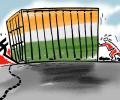
The rising dependence on discounted crude oil has resulted in India's trade deficit with Russia hitting the second-highest place last year, after China, reveals Department of Commerce data. From April through January 2022-23 (FY23), India's maximum trade deficit was with China, at $71.58 billion. This was followed by Russia, where the deficit expanded sevenfold - from $4.86 billion in April-January of 2021-22 (FY22) to $34.79 billion during the same period in FY23.
The government will develop a mechanism to ensure that e-commerce companies and entities that have adopted Open Network for Digital Commerce (ONDC) architecture are compliant with the rules. Non-compliance may result in a penalty. "We will have our own evaluation system, and if we find any player is not sticking to it, then we will take action. "Participants will have to be compliant with the rule of the land," Sanjiv, joint secretary at the Department for Promotion of Industry and Internal Trade (DPIIT), told reporters on Thursday.

Go-getter, ambitious, dynamic, workaholic are some of the adjectives that officials who worked closely with B V R Subrahmanyam use to describe him.

The Hyderabad Heist is a blow-by-blow account of an audacious theft committed in 2018, and a recounting of how the Hyderabad Police combined technology and human intelligence to crack the case.
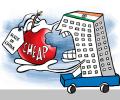
A decline in demand from six of India's top 10 import partners -- China, Saudi Arabia, Iraq, South Korea, Australia, and Singapore -- resulted in India's imports hitting a 17-month low of $50.6 billion in January, showed the data compiled by the department of commerce. Shipments from South Korea, Australia, and Singapore declined by 14.1 per cent, 26.7 per cent, and 9.8 per cent, respectively. Among the 10, growth in inbound shipment was seen only in the case of the United Arab Emirates (12.1 per cent), the US (27.4 per cent), Russia (297.4 per cent), and Indonesia (22.9 per cent).

The US is taking several measures, such as increasing the number of staffers, to further facilitate the issuance of business visas in India, a senior US government official said on Tuesday. "We have also made significant progress by issuing more H1B and L visas in 2022 than we did even in 2019 before the pandemic. "This is a significant improvement. We are in the process of raising our staff," Arun Venkataraman, US Assistant Secretary of Commerce for global markets, said.

The importance of China as India's top trading partner cannot be understated.

As sanctions-hit Russia increasingly relies on consumer products from India, outbound shipments to Russia have started picking up for the second consecutive month in October. This comes after it witnessed contraction for six consecutive months starting March, commerce and industry ministry data showed. During October, India exported goods worth $280 million, up 3.7 per cent as compared to a year ago. It was led by demand for items such as vegetables, tea, coffee, chemicals as well as iron and steel products.

The central government and the Reserve Bank of India have devised a country-specific plan towards implementation of overseas trade in rupee, people aware of the matter said. To start with, a small number of banks will be allowed to manage cross-border transactions in domestic currency with a particular country. "Small countries that are dollar-deficient have shown interest in doing trade in rupee.

The department of commerce has urged the agriculture ministry as well as the diplomatic mission in Tehran to apprise it of details as to why Iranian buyers have stopped import of rice and tea from India, a senior government official said. Exporters said that exports of items such as high quality tea and rice have stopped since last week. As of now, there has been no confirmation from the authorities and the response from the embassy in Tehran is also taking time, they said.

Last pictures have that power to transcend time. And last pictures can, sometimes, capture a lifetime, explains Veenu Sandhu.
 © 2026 Rediff.com - Advertise with us - Disclaimer - Privacy Policy - Sitemap - Feedback - About us - Terms of use - Grievances